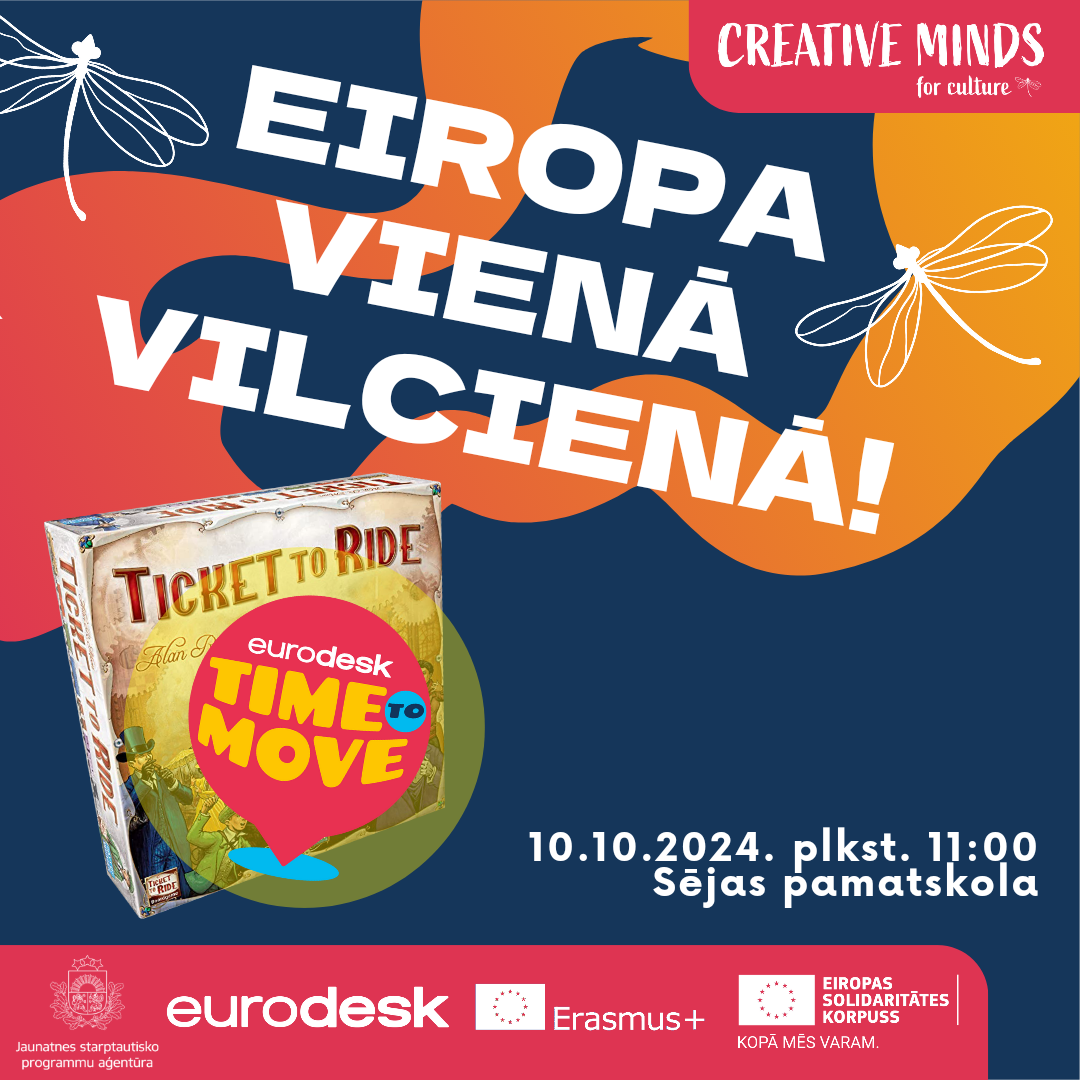
Europe on the same train!

Title of the Project

Europe on the same train!

Organisation

Creative Minds for Culture

WEBSITE

https://mindsforculture.com

Project link

https://mindsforculture.com/sejas-pamatskolas-jauniesi-iepazist-mobilitates-iespejas/

Project dates

October 10, 2024

October 10, 2024

What is it about?

On 10 October 2024, the organisation Creative Minds for Culture organised a playful activity, “Europe on the Same Train!” for young people from Sēja Primary School as part of the Eurodesk network’s “Time to Move” campaign.

The aim of the activity was to provide young people with the opportunity to explore the opportunities offered by EU programmes and to promote European ownership through elements of play and gamification. It also aimed to help participants learn more about the opportunities available to young people in local, regional, and international contexts. The event also promoted the Time to Move campaign and the opportunities for young people to get involved in various local, national, and international initiatives and decision-making processes.

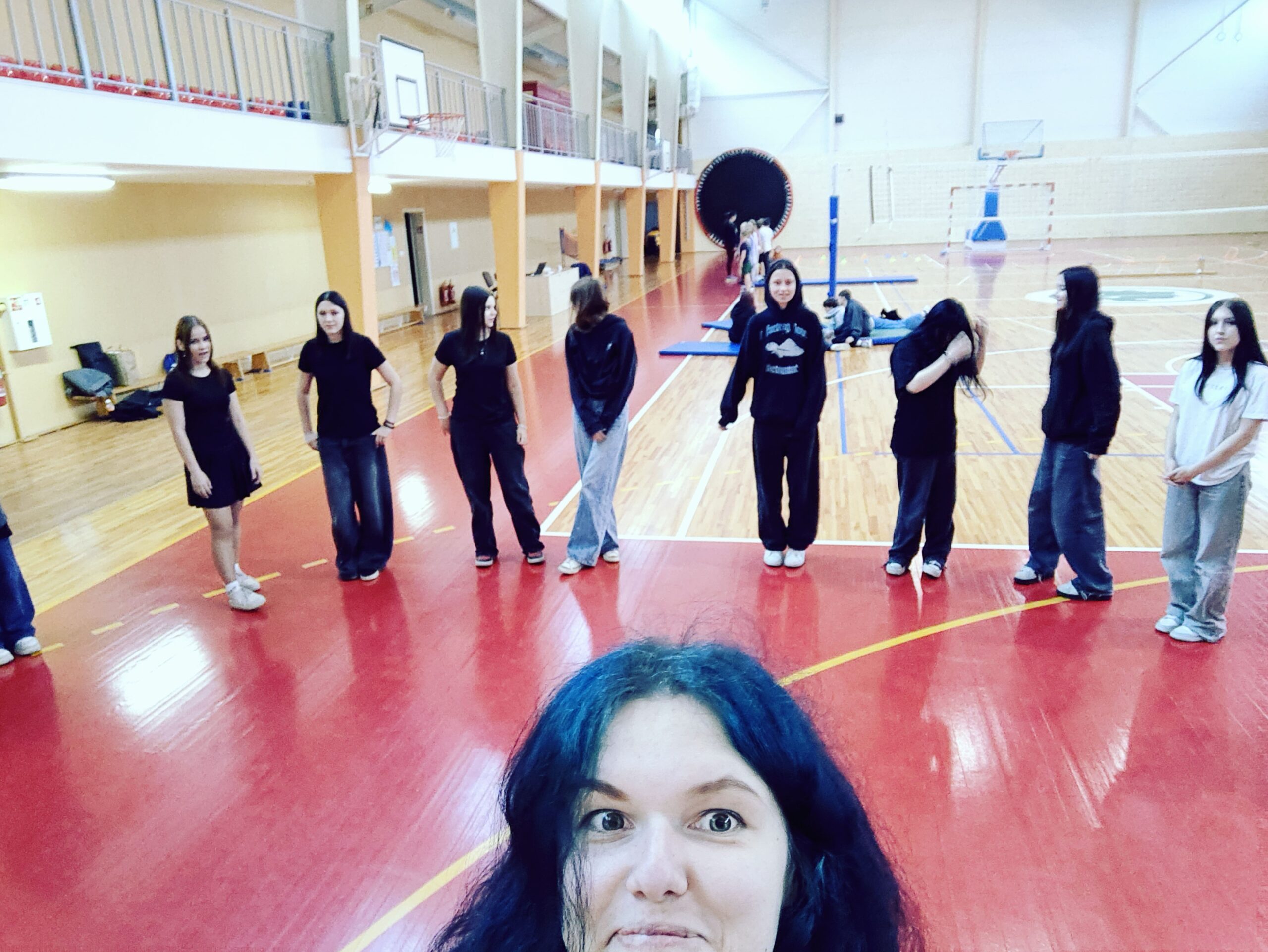
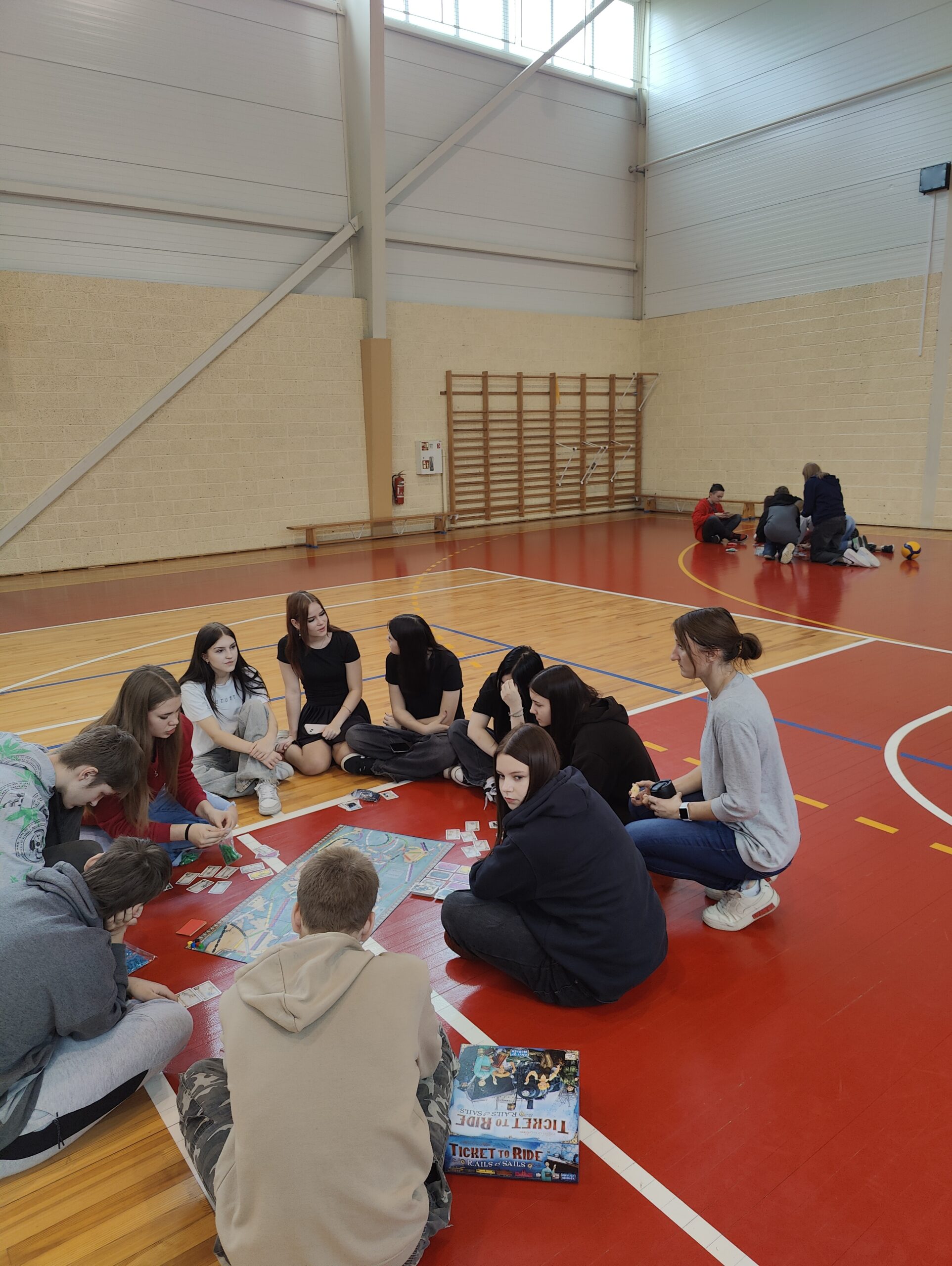
During the event, young people started with some team-building games to get to know each other, then split into teams to play Ticket to Ride: Europe map board games. The games had been specifically modified with additional game cards and mechanics to help youngsters gain more knowledge and understanding about Europe and youth opportunities. Participants interacted with each other by answering various questions during their turns, pulling out question cards, and engaging in discussions.

After the game session, the group gathered together to evaluate and reflect on their game experience, ask additional questions, and discuss youth opportunities and their role in the European context more in-depth. The best players received prizes for winning their respective board games, and everyone enjoyed snacks together at the end.
How is this project relevant to the specific category?

This activity was designed from the outset to be interactive, implemented through game-based learning. As board games are one of the activities young people in the local area enjoy doing with friends, it was seen as a valuable tool to create a learning experience while having fun. The board game “Ticket to Ride” was carefully chosen from an array of locally available board games for several reasons. Firstly, because it features a map of Europe and involves building connections on the map, it has a direct connection to the topic. Secondly, due to its game mechanics, it could be adjusted to include additional tools and cards with questions, facts, and tasks about Europe, youth opportunities, the Eurodesk network, and the Time to Move campaign. This enabled youngsters to learn while playing the game, making their moves, asking each other questions, and completing tasks to progress in the game. Consequently, the whole activity of team-building and interaction between participants raised awareness about European opportunities in a practical, playful way, and was reported to be very enjoyable and informative by the participants.

What was the impact of the project?

The activity took place in a school in a rural area, where not much information and few activities from outside the village reach the local youth. Therefore, it was an impactful activity that was appreciated and eagerly welcomed by the youngsters. After the activity, the young people said they learned a lot of new information about youth opportunities that they did not know before, and some were encouraged to the extent that they said they would consider applying to, for example, a youth exchange project. The local youth community became more open to the idea of youth participation and gained a better understanding of the importance of active citizenship and utilising the opportunities available to them. Moreover, they realised that there are many opportunities just waiting to be seized, and hopefully, in the long term, the local young people can actively use those opportunities and bring their learnings back to improve the village according to their vision. The participants felt more inclined to share their experiences if someone had travelled somewhere, and one participant also shared her story about being in an Erasmus+ project, which really interested the other participants and helped them understand that participation in such activities is quite possible and really simple.

Did the project have any green focus?

All the communication about the event happened digitally, and printing of paper materials was generally avoided. On the spot, reusable organisation banners were put up for extra Eurodesk network visibility. There was no waste created in the implementation of the event, as the snacks came on reusable plates which were given back to the catering company, and the extra cards created for the adjustments of the board games were left within the board game setup to be used repeatedly when the games would be intended to be used for learning reasons.The facilitator team used public transport and carpooling in order to get to the school where the activity took place.

How did you ensure Eurodesk's visibility in your project?

Project highlights

https://mindsforculture.com/sejas-pamatskolas-jauniesi-iepazist-mobilitates-iespejas/

Your project on video

https://www.instagram.com/p/DA-6Mf_iheu/